As is well known, the eruption of wisdom teeth (third molars) comes with a number of difficulties. Wisdom teeth may not erupt at all and may lie in the bone, parallel to the other teeth, or they may partially emerge and still not erupt fully. In any case, wisdom tooth eruption has a negative effect on the surrounding tissues, especially the gums, causing pericoronitis.
What is pericoronitis?
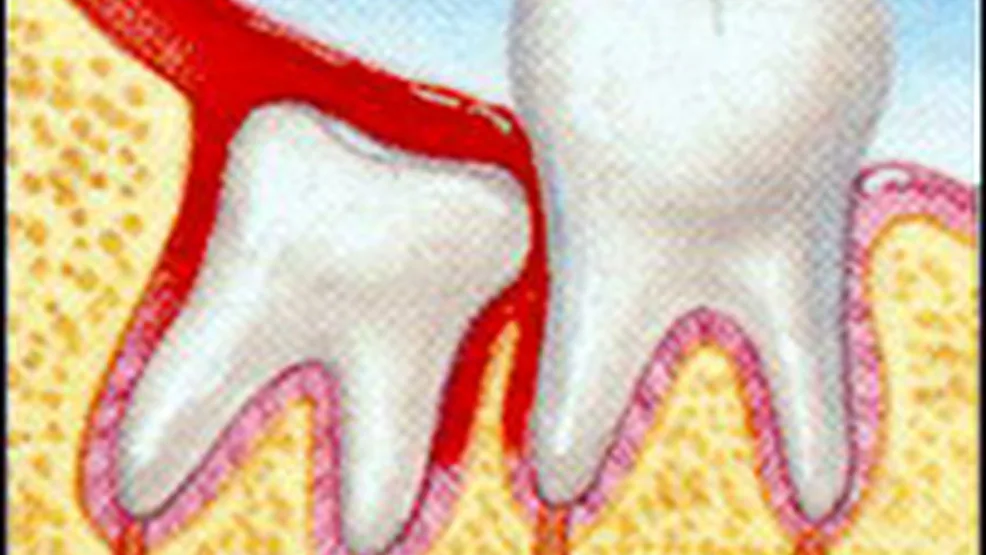
Pericoronitis is an inflammation of the tissues around a tooth, linked to difficult eruption.
How does pericoronitis develop?
As wisdom teeth grow, they injure the surrounding soft tissues. Since the gum is the softest, it is the easiest to injure. As soon as the wisdom tooth appears, a gap forms in the gum that fills with food, plaque and microbes from the mouth. Any of these can then cause gum inflammation. In more complicated and severe cases, pus may form, which can then spread to the neck and cheek area.
Symptoms of pericoronitis:
- Sharp pain when pressing on the gum
- Swollen lymph nodes
- Difficulty opening the mouth
- Formation of gum pockets where food debris collects (a gum flap)
- Swollen gums
- In advanced forms of the disease, bad breath appears when there is a purulent discharge
Treatment of pericoronitis:
- The patient must rinse out food debris that has collected under the gum on their own. This requires not only rinsing with water, but also brushing carefully with toothpaste and a brush, especially around the gum pocket or flap.
- At the first symptoms, if you can’t get to a doctor, rinse with warm salt water throughout the day, which has an antibacterial effect.
- If the swelling is severe, especially if it spreads towards the throat, cheek or jaw, medication is necessary. Painkillers can be taken for pain.
- If the disease has progressed to the purulent stage, surgical treatment is necessary, with final extraction of the wisdom tooth.
How to avoid pericoronitis?
To prevent pericoronitis from developing when wisdom teeth erupt, thorough diagnosis of the process is essential. Using X-rays, the dentist can determine how the tooth and soft tissues are likely to develop. At an early stage, the disease can be prevented, so see a doctor at the first symptoms. Don’t forget thorough hygiene. After every meal, pay special attention to the condition of the gum around erupting teeth. How you care for your future tooth determines how it develops and whether you avoid pericoronitis.