Glossitis – an inflammatory disease of the tongue caused by a bacterial or viral infection.
What causes glossitis?
Inflammation of the tongue may be the result of an infection or a symptom of a more serious systemic disease. There are acute and chronic forms. Glossitis is accompanied by inflammation of the tongue and changes in its color and texture. If neglected, glossitis may be followed by papillomas (mushroom-like growths) forming on the surface of the tongue.
With a local infection, glossitis is caused by bacteria or viruses (including the herpes virus), and the infection is helped along by burns to the tongue and mechanical injuries to the mouth and tongue. Proven risk factors for glossitis include nicotine, alcohol, hot food, spicy seasonings, and allergic reactions to toothpaste, mouthwash, oral sprays and caramel.
Glossitis can also develop against the background of systemic diseases such as iron-deficiency anemia, lichen planus, vitamin B deficiency, erythema, aphthae, syphilis, etc.
In rare cases, the cause of glossitis cannot be identified.
Symptoms of glossitis

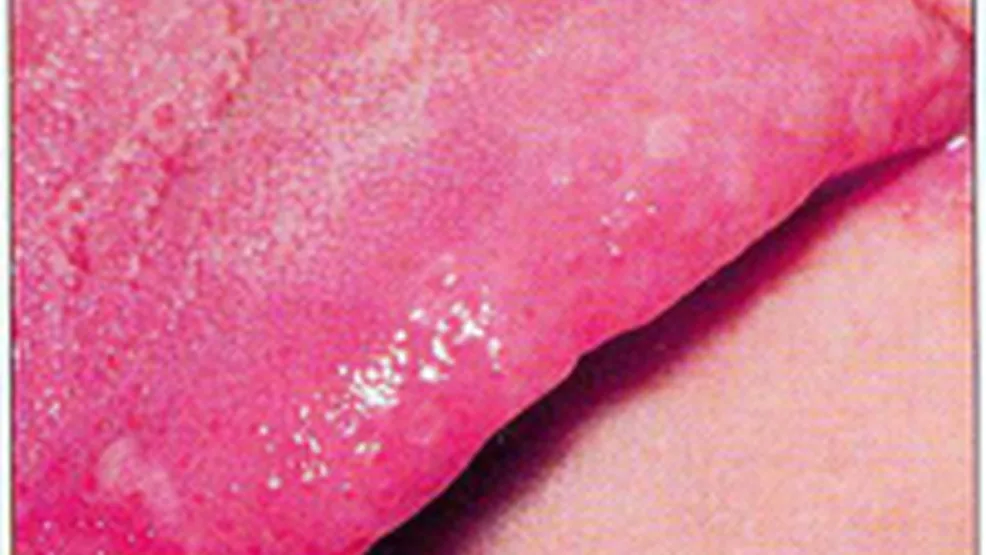
- Burning and inflammation of the tongue.
- The tongue turns bright red or burgundy.
- With anemia, the tongue is covered with a pale coating.
- The tongue may increase in size and become soft.
- Difficulty chewing, swallowing and speaking.
Do you need to see a doctor?
If you have any of the symptoms listed above and they don’t go away within a day, you must see a doctor. You should also see a doctor if you have problems breathing, swallowing or speaking.
Diagnosis
If you have symptoms of glossitis, you must see a doctor. The dentist will examine your mouth and tongue, check for papillomas, ask the questions needed for an accurate diagnosis and, if necessary, order tests to rule out a systemic disease.
Treatment of glossitis
With infectious-inflammatory glossitis, the first priority is to eliminate the cause of the infection. Modern medicine has plenty of medications to treat glossitis. As a rule, except in especially severe cases, glossitis does not require hospitalization.
First of all, pay close attention to oral hygiene. Brush your teeth at least twice a day with a quality toothpaste recommended by your doctor.
Once the cause has been identified, you will be prescribed antibiotics or antifungal medications.
One well-justified modern treatment method is prescribing immunomodulators. Medications in this group activate the protective functions of the oral mucosa, strengthening its bactericidal activity.
Prevention
As is well known, it is easier to prevent a disease than to treat it. That’s why the “Nino Beridze Orthodontic Center” advises:

- Keep up dental and oral hygiene
- Have regular dental check-ups
- Avoid aggressive foods and spicy seasonings
- Avoid excessive smoking and drinking.
We wish you good health!