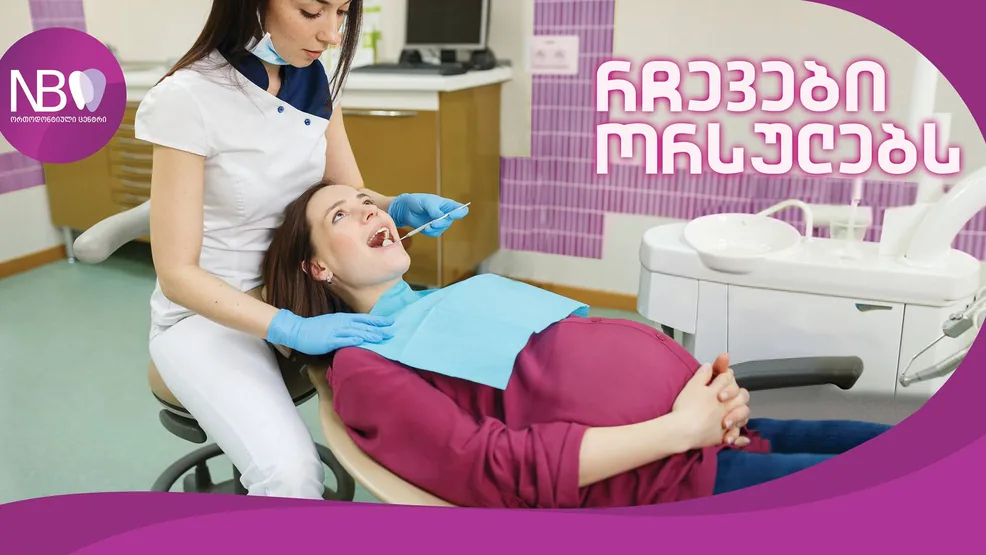
Oral care is very important for everyone, but for pregnant women it matters twice as much. Hormonal changes in a woman’s body can have a negative effect on her teeth, which also puts the baby’s health at risk.
There’s a myth that visiting the dentist is dangerous for a pregnant patient.
On the contrary, pregnant women actually need to see a doctor, but a few things should be kept in mind:
- Timing of the visit – ideally, a pregnant woman should avoid dental procedures in the first and third trimesters. The best time to see a doctor is the second trimester.
- Simple procedures – for example, hygiene cleaning, fillings and placing crowns are procedures that are safe for both mother and baby.
- X-rays are not advisable; if one is unavoidable, it should be digital, with a 90% lower radiation level.
- Teeth and morning sickness – morning sickness is typical of the first trimester. It is one of the main factors in enamel damage and caries. To prevent this, brush your teeth and rinse your mouth within an hour after vomiting. You can also use an alcohol-free fluoride mouthwash, as it neutralizes the acidic environment in the mouth and fights caries-causing bacteria.
- Food – during pregnancy, the mother’s body lacks a number of vitamins and nutrients. All this has a negative effect on tooth enamel, so the mother’s diet should be enriched with calcium, fluoride, other microelements, minerals and vitamins A, C and D. Eat dairy products, spinach, cabbage and fish.
Qualified doctors around the world advise: dental treatment during pregnancy is not only allowed, it’s essential!
As is well known, pregnancy is a natural physiological process that shouldn’t have a negative effect on the body.
Unfortunately, for various reasons, the condition of the teeth often gets worse. Risk factors for oral diseases during pregnancy include hormonal changes, metabolic disorders and weakened defenses.
Pregnancy is a very important time in a woman’s life.
The baby’s main organs and systems form in the 2nd month of pregnancy. The foundation of the baby’s health is the absence of chronic infections in the mother, including in the teeth and jaws.
Sanitation of the mouth from the early stages of pregnancy makes it possible to keep the teeth in perfect condition.

What problems can an expectant mother face?
Hormonal changes during pregnancy can cause gingivitis. Gingivitis is inflammation of the gums caused by bacteria in plaque. Signs of gingivitis increase towards the end of pregnancy. Thorough oral hygiene reduces the risk of the disease. To treat gingivitis, we use professional teeth cleaning and anti-inflammatory therapy. Without treatment, or with inadequate treatment, gingivitis can develop into more serious inflammation – periodontitis, periodontal disease and, later, tooth loss.
Periodontitis – a very common inflammatory disease in which the attachment between the teeth and gums breaks down and periodontal pockets form.
During pregnancy, the disease develops and flares up because of impaired blood circulation and weakened immunity.
In addition, the body lacks vitamins, blood vessels become less elastic, calcium is lost and bone tissue breaks down. According to scientists, periodontitis causes more complications during pregnancy than alcohol and nicotine.
Increased bleeding from the gums is one of the common symptoms of pregnancy. As with other dental diseases, calcium deficiency is responsible here too, especially in the second half of pregnancy. During this period, calcium and phosphorus are laid down to form the baby’s bones and teeth.
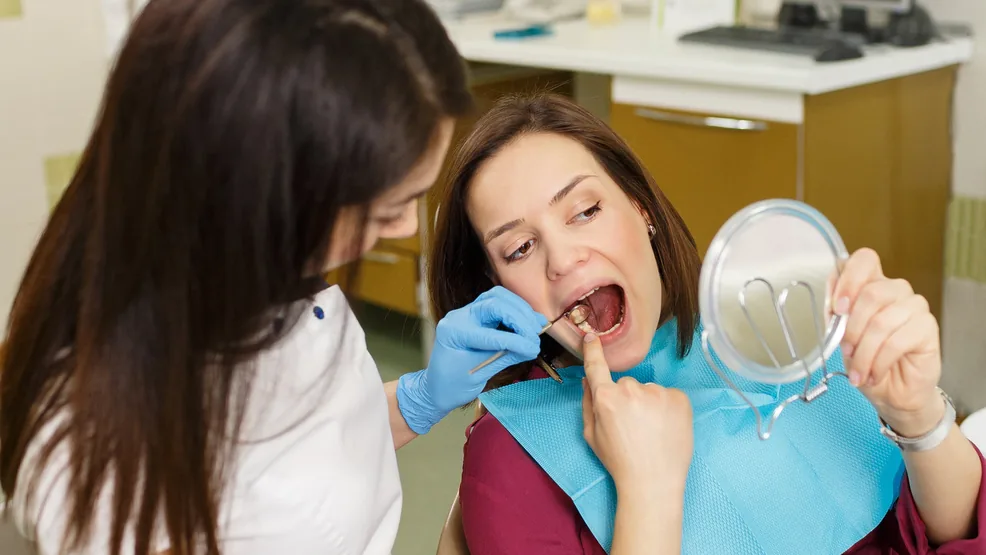
The consequences of caries developing during pregnancy are especially serious. Calcium deficiency, increased microbial activity against a background of weakened immunity, and changes in the composition of saliva all cause caries. It’s especially worrying if this problem develops in the first or third trimester, when the risk of complications is high and the use of medications is limited.
Which dental procedures can and can’t be done during pregnancy:
In modern dental clinics anesthesia can be chosen with two aims: effective pain relief and the safety of the baby.
Digital X-ray machines work precisely, in a targeted and localized way (over a diameter of 2-3 centimeters), the radiation is minimal, and a lead apron provides 100% protection.
Dental procedures that can be done during pregnancy:
- caries treatment;
- periodontal treatment;
- tooth extraction;
- treatment of inflammation of the teeth and gums;
- fitting braces.
Dental procedures that are best avoided during pregnancy:
- prosthetics;
- implantation;
- tartar removal;

Dental procedures that must not be done during pregnancy:
- arsenic-containing or arsenic-based medications must not be used;
- anesthesia should be used only when strictly necessary;
- teeth whitening is not allowed;
- don’t get stressed – it’s best to see a dentist you know and trust.
We’re sharing this information to remind you once again how important it is to see a dentist in time, have all the preventive care, deal with any existing problems and get advice on oral care, so as to avoid problems during pregnancy.
Another reason to get treatment in time is that after giving birth, mothers have no time left for treatment.
And if you do need a tooth treated or extracted, our clinic is ready to provide qualified help, using all the medications and materials specially designed for pregnant women. Remember that the risk of complications is lower with treatment than without it.
Finally, we’d like to draw expectant mothers’ attention to the fact that your visit to the dentist shouldn’t be limited to treating and cleaning your own mouth. Even before the baby is born, you need to know how to care for your future child’s baby and permanent teeth. It’s also advisable for an expectant mother to be informed about all available preventive measures, such as fluoridation, fissure sealing, etc.
Braces and pregnancy:
Braces and pregnancy are absolutely compatible. During pregnancy, expectant mothers have a lot of free time. If you have a 9-month “light” period ahead of you, why not spend some of it on your teeth?
To do this, you need to go through a preparation period, which includes fillings and, if necessary, tooth extractions. It’s better to have braces fitted before pregnancy. Tooth extractions and treatment in late pregnancy are not advisable. It’s also better to get used to braces before pregnancy. Once you’re used to them, wearing them during pregnancy becomes easy, and you’ll be able to smile confidently at your child with beautiful, straight teeth.
Wearing braces requires double attention to oral hygiene. In this case, it’s best to brush your teeth after every meal and use special mouthwashes containing calcium and other elements.
At every visit to the orthodontist, be sure to have your teeth checked for caries.
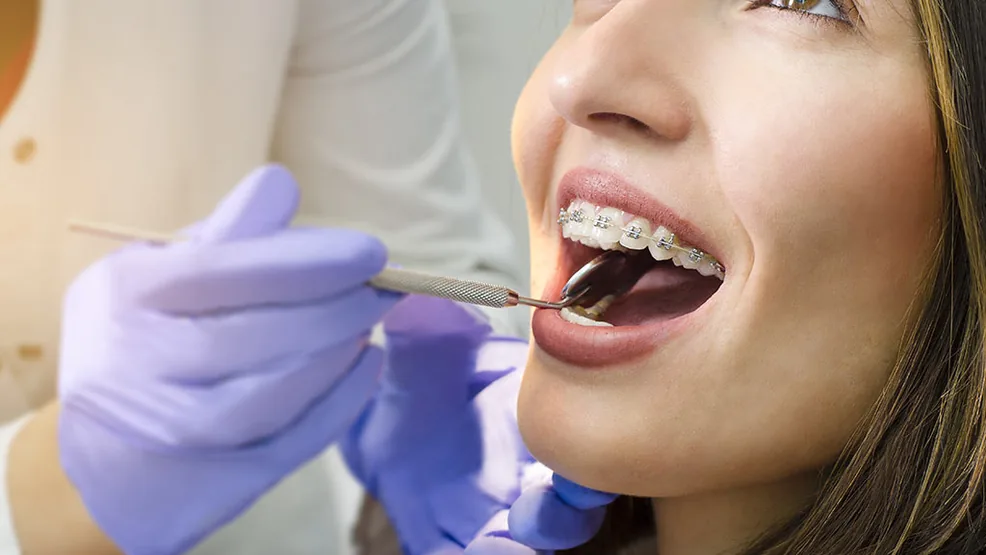
Take care of your oral hygiene so that your little one develops healthily and you keep a dazzling smile after pregnancy too!