Arthritis is an inflammatory disease of the components of a joint. Depending on the cause of the inflammation, inflammation of the temporomandibular joint can be divided into infectious and traumatic arthritis. Infectious arthritis is in turn divided into non-specific and specific arthritis.
Non-specific infectious arthritis develops when a common (non-specific) infection enters the joint. Depending on how the infection spreads, hematogenous and contact arthritis are distinguished. Hematogenous arthritis develops from general infectious diseases (flu, diphtheria, smallpox, typhoid, tonsillitis, upper respiratory catarrh, odontogenic chronic sepsis, etc.). Contact arthritis develops when an infection spreads into the joint from neighboring tissues. In children, this is most often purulent inflammation of the middle ear, where the inflammation destroys bone structures. In adults – osteomyelitis of the lower jaw, parotitis, mastoiditis.

In acute arthritis, there is serous and, rarely, purulent inflammation. The patient complains of sudden severe pain in the joint that radiates towards the ear and temple. Any movement of the lower jaw makes the pain worse.
The clinical picture in the acute phase is characterized by tissue infiltration and redness in the joint area. The external ear canal is narrowed. Palpation of the joint is very painful. Serous inflammation runs with a normal or low-grade fever, without significant changes in blood cell counts.
The chronic phaseis characterized by moderate spontaneous pain that gets worse when opening the mouth. The general condition is satisfactory. Mouth opening is limited, and chewing is difficult.
A characteristic sign of chronic arthritis is clicking. It may be mild, moderate or pronounced, when people nearby can easily hear it as well as the patient.
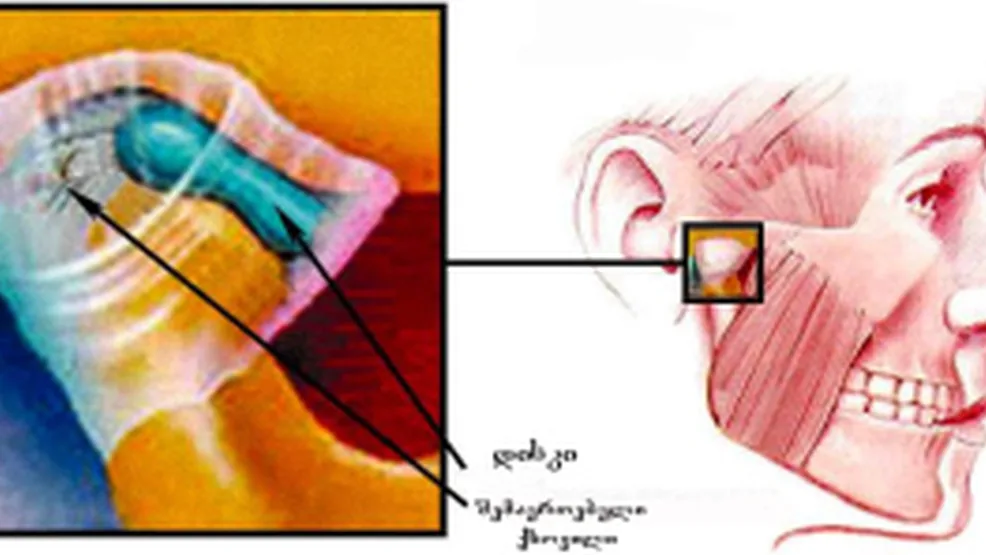
Non-specific arthritis can develop against the background of rheumatic intoxication (rheumatoid arthritis). In this case, the process affects both joints at the same time. Joint function is impaired, and the reaction of the surrounding tissues is weak. The disease runs with periodic flare-ups, during which there is a low-grade fever and pain in both temporomandibular joints and often in other joints too. With comprehensive treatment, the inflammation quickly subsides.
Acute traumatic arthritisdevelops from a single injury to the joint caused by a traumatic agent (a blow, bruise, wound) or by opening the mouth as wide as possible. Acute (closed) trauma tears the ligaments of the joint and causes bleeding into the joint, followed by the formation of a blood clot. The clot may turn into fibrous bands, which in adults can lead to fibrous ankylosis.
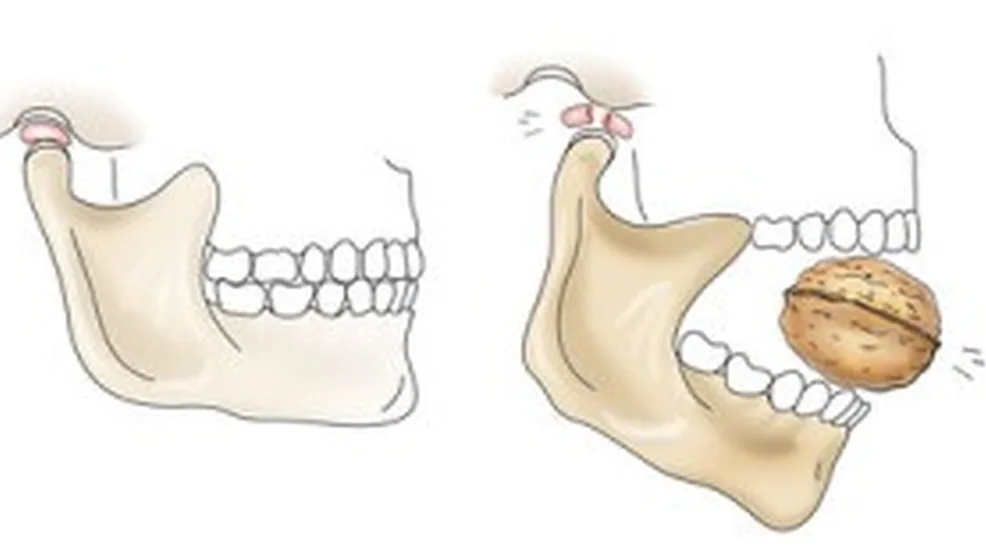
Chronic traumatic arthritisis caused by an abnormal, incorrect position of the head of the lower jaw in the mandibular fossa, which may be due to the loss of a large group of teeth, incorrect prosthetics, a deep bite or tooth wear. For these reasons, the head of the lower jaw, the mandibular fossa and the articular disc are constantly injured over a long period.
At first there is discomfort in the joint area, which later turns into significant constant pain that gets worse when opening the mouth.