“Not so long ago, a complete removable denture was considered the only treatment for complete tooth loss, but this can hardly be called an ideal solution: unreliable fixation while chewing and the gag reflex caused serious discomfort. There was also the risk of the denture falling out of the mouth” – says Pavle Khujadze, prosthodontist and implantologist at the “Nino Beridze Orthodontic Center”.

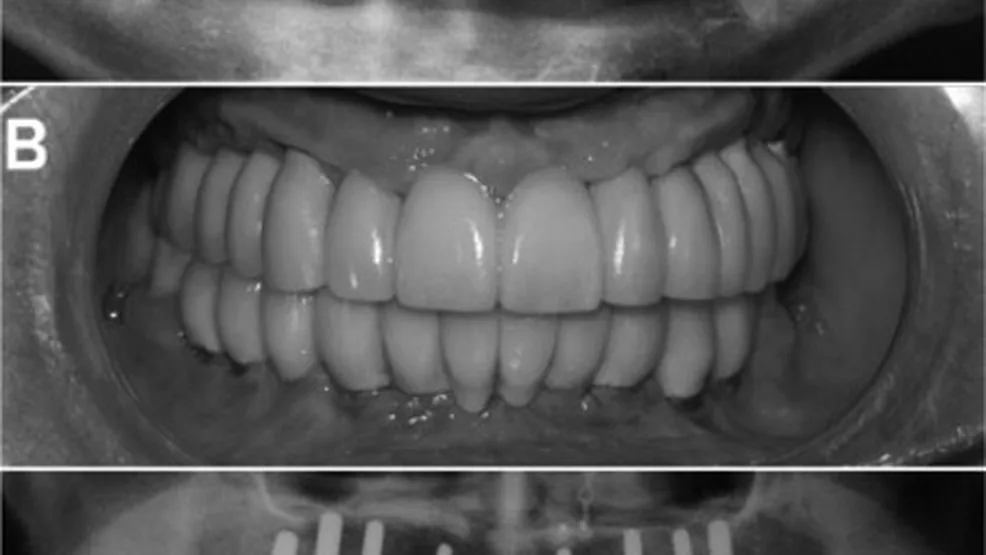
What types of prosthetics are available for a toothless jaw?
With complete tooth loss, teeth are restored using 2 methods:
First – making a complete removable denture.
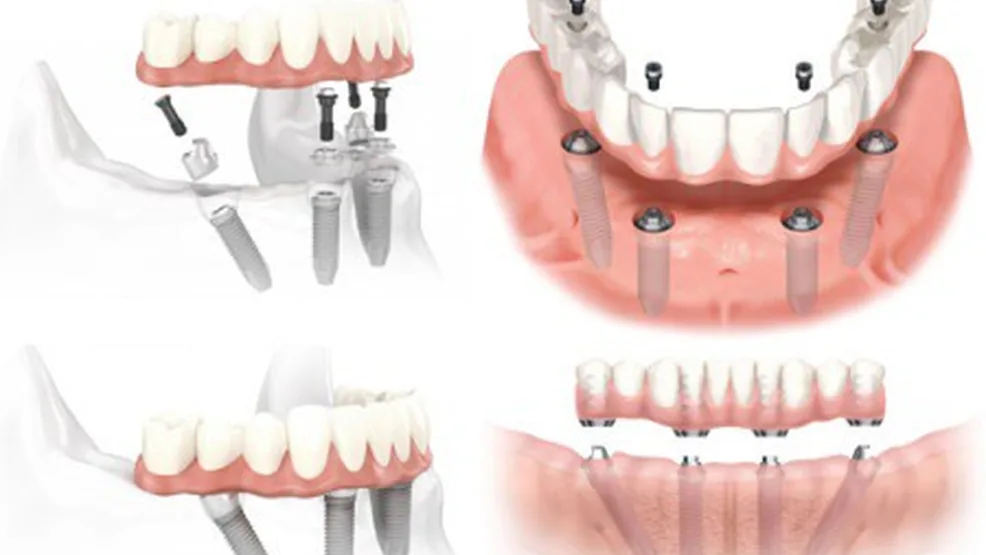
Second – fixing a denture on implants. This is divided into 2 types: removable and fixed prosthetics.
When it comes to the best possible treatment option for complete tooth loss, specialists recommend dental implantation.
What is the advantage of implantation for complete tooth loss?
The main advantage of an implant-supported denture is reliable fixation.
Such a denture will never fall out of the mouth. With a complete removable denture, fixation relies on suction to the palate, the anatomical features of the jaws and, in the case of the lower jaw, gravity. As for fixation gels, they only help when there is a small discrepancy between the denture-bearing area and the denture. If the patient’s denture isn’t relined within 3 years, they may need “half a tube” of gel to hold it in place.
It should be noted that there are a number of ways to improve the fixation and stability of a denture, but wearing a classic removable denture with complete tooth loss significantly lowers the patient’s quality of life. In addition, wearing a removable denture speeds up the atrophy (loss) of bone tissue, which makes later implantation more difficult.
How serious is the gag reflex problem with a classic removable denture?
The gag reflex is quite common with complete removable dentures. There are almost no ways to eliminate this problem, because it is usually an individual reaction of the body. The thing is, on the upper jaw these dentures must end at the so-called A-line, where the hard palate meets the soft palate; otherwise there will be no fixation.
The benefits of implant-supported prosthetics when eating
If we compare chewing efficiency with a classic removable denture and an implant-retained removable denture, the latter is several times more efficient – and, as is well known, how well food is chewed affects the digestive system and the whole body. Patients with complete removable dentures often visit gastroenterologists, who in turn can only suggest blending their food. But everyone wants to eat a full, normal diet.
It is also worth noting that with a complete removable denture, chewing is accompanied by pain, because the structure presses on the mucosa, beneath which is the periosteum with many nerve endings. When the denture is fixed on implants, there is no pain, because there is no pressure on the soft tissues.
How comfortable is a full denture on implants?
With complete tooth loss, when the denture is fixed on implants, there is no need to increase its size for fixation and stability. The patient has natural sensations, as with their own teeth. A denture fixed on implants doesn’t require an adaptation period – the patient feels as if they have grown new teeth.
How many implants are needed for complete tooth loss?
Ideally, 14 implants with individual crowns could be placed on each jaw to fully restore the dental arch. However, leaving aside the financial side of this method, with complete tooth loss there isn’t enough bone tissue for so many implants, and the proximity of nerves doesn’t allow it. Besides, placing 28 implants isn’t really justified. As for the minimum number of implants, 8 can be placed – four on each jaw. This design is called “All-on-4”. However, for the best result, specialists recommend placing 6 implants per jaw.