


On screen and on social media, we often see the bright smiles of our favorite actors and singers, which have become so distinctive and famous that a term - the Hollywood smile - has been established to describe them. A similar result can be achieved with various methods of aesthetic dentistry, and one of the most common among them is dental veneering.
This term did not appear by chance, and the history of veneers really is connected to Hollywood. In the 1930s, the Californian dentist Charles Pincus made thin shells for film studios, which were temporarily attached to actors' teeth before filming. At first, they lasted only a few hours, because the technology for firmly attaching them to the tooth did not yet exist. Later, methods for bonding them to the enamel were developed, and veneers could be used for a long period as well.
In the following decades, veneering spread to various countries around the world and became one of the well-known procedures of aesthetic dentistry. Today this method is in demand in Georgia too, and patients often turn to “NB Dental - Nino Beridze Clinic” for dental veneers.
What Is a Veneer and When Is It Used?
A veneer is a thin shell that covers the front, visible surface of a tooth and is used to correct its color, shape or minor defects.
Dentists often recommend veneers when the color of a tooth cannot be changed by whitening, for example, in the case of pigmentation caused by medication. With their help, a chipped edge, the space between teeth (diastema), as well as minor differences in shape and size can also be corrected.
However, a veneer is not the best choice in every case. For example, if there is a pronounced bite disorder, orthodontic treatment should be planned. And for the correction of a severely damaged or cracked tooth, the dentist may recommend a crown instead of a veneer.
How Do Porcelain and Composite Veneers Differ from Each Other?
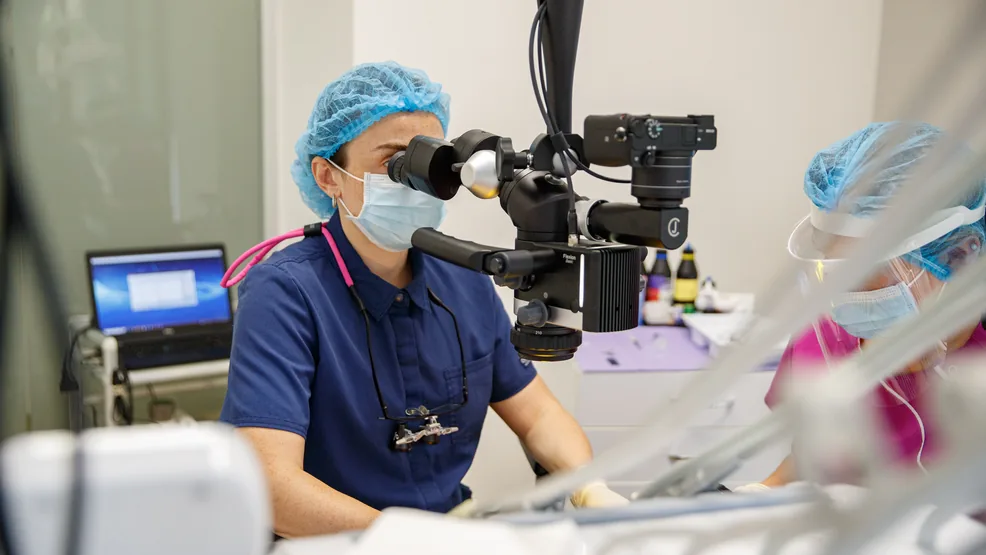
Dental veneering is possible with both porcelain and composite material. A porcelain veneer, also known as a ceramic veneer, is made in a laboratory. It reflects light like natural enamel, so it is visually almost indistinguishable from the tooth. Coffee, tea and red wine have less effect on its color, and with proper care a porcelain veneer lasts on average from 10 to 15 years, sometimes even longer.
A composite veneer is the same as artistic restoration of teeth. During this procedure, the composite material is placed directly on the tooth and the dentist shapes it. Unlike a porcelain veneer, artistic restoration does not require preparation of the enamel. However, composite is a softer material, which is why over time it may change color and lose its shine. Its service life is also relatively short and averages a period of 5 to 7 years.
Who Are Veneers Suitable For and When Is It Better to Postpone the Procedure?
Before getting veneers, the teeth and gums must be healthy. Therefore, if caries, gum inflammation or another dental problem is found during diagnostics, it must be treated first, and only after that can the teeth be veneered.
Bruxism, that is, involuntary teeth grinding, which mostly occurs during sleep, should also be taken into account. At this time, a heavy load is placed on the teeth, which creates a risk of the veneer being damaged or chipped. In such a case, the dentist may recommend a protective night guard, which will reduce the load on the veneer during sleep and protect it from damage.
How Is Dental Veneering Done?
Dental veneering begins with a consultation and diagnostics. The dentist will assess the condition of the teeth and gums, listen to your wishes and, based on them, select the color and shape of the veneer. At this stage, attention is paid to facial features and the shape and color of the teeth, so that the smile looks natural.
Next, the tooth is prepared for the porcelain veneer. For this, a very thin layer of enamel, approximately 0.5 to 0.7 millimeters, is treated, so that the veneer is positioned correctly on the surface of the tooth and its natural shape is preserved.
After that, digital scanning of the teeth is carried out at “NB Dental - Nino Beridze Clinic”. The scanner creates an accurate three-dimensional image of the teeth, and the data obtained is sent to the laboratory, where the porcelain veneers are made.
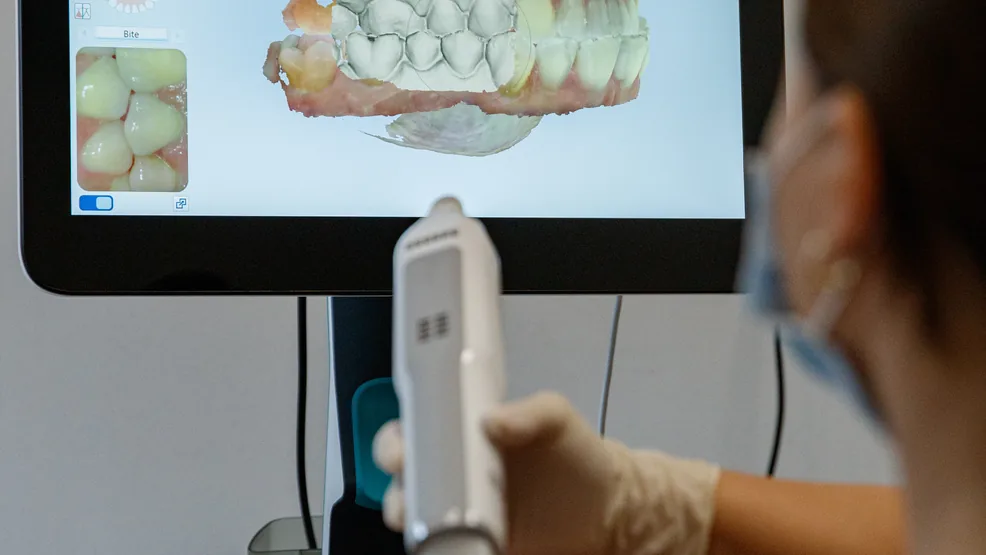
At the last visit, the dentist attaches the finished veneers to the teeth with a special material, checks their shape, color and bite, and makes adjustments if necessary.
How Should You Care for Veneers?
So that veneers keep their color, shine and shape for a long time, the dentists of “NB Dental - Nino Beridze Clinic” share several tips:
- Brush your teeth twice a day and choose a non-abrasive toothpaste for this, so that the surface of the veneer does not get scratched;
- Use dental floss every day. Otherwise, plaque accumulated at the edge of the veneer may cause gum inflammation, and over time the edge of the shell may become more noticeable;
- Do not crack nuts, ice or other hard foods with your teeth. Also avoid biting into very hard food with your front teeth;
- Avoid smoking tobacco and do not often consume products that change the color of teeth, for example, coffee, tea and red wine;
- Have a professional cleaning and a scheduled check-up once every six months. During the visit, the dentist will also assess the condition of the veneers and notice possible changes in time.
Keep in mind that a porcelain veneer does not whiten under the effect of whitening gel, while the color of natural teeth may change over time. So that the color difference between the veneer and the adjacent teeth does not become noticeable, regular hygiene and professional cleaning are doubly important.
To achieve the Hollywood smile that charms everyone so much, white teeth and a perfectly straight shape alone are not enough. The color, shape and size of the veneer need to be selected taking into account the facial features and overall appearance. This is exactly how a harmonious and attractive smile is created at “NB Dental - Nino Beridze Clinic”.
Frequently Asked Questions
Is veneering painful?
Dental veneering is an almost painless procedure. In the first days, the teeth may be slightly sensitive to cold or hot food, but this sensation will gradually go away.
Does a veneer damage the tooth?
At our clinic, we carry out the procedure with minimal intervention in order to preserve the healthy tissue of the tooth as much as possible. Getting a veneer, as a rule, does not require endodontic treatment (nerve removal), and the tooth retains its vitality. Before starting the procedure, the dentist assesses the condition of the oral cavity in detail and plans the treatment so that, along with the desired aesthetic result, the health of the tooth is also preserved.
What should I do if a veneer comes off or gets damaged?
If a veneer comes off, keep it and contact the clinic. Do not postpone your visit to the dentist, because in some cases it can be reattached. Do not try to glue the veneer at home, because household glue can damage both the tooth and the shell itself.
Why do patients choose “NB Dental - Nino Beridze Clinic”?
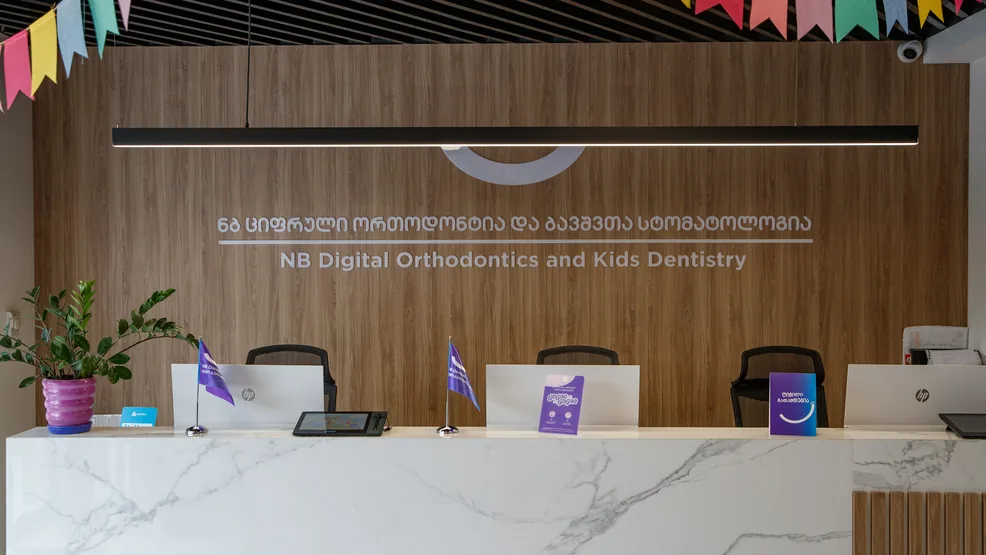
“NB Dental - Nino Beridze Clinic” has been operating since 2010, and its main field is orthodontics. The clinic's dental services also include therapeutic, aesthetic and other fields. Doctors of various specialties work in the team, and if several of them need to be involved during treatment, they plan the process in agreement with each other. This approach is especially important when the use of several treatment methods is necessary to achieve the desired result.
How do I book a consultation?
To schedule a consultation, contact “NB Dental - Nino Beridze Clinic” at (032 2) 32 22 27 or write to the email info@nbdental.ge.
The clinic is located in Saburtalo, at No. 1a Davit Tavkhelidze Street, and is open from Monday to Saturday inclusive, from 09:30 to 20:00.