According to research, roughly every second person in the world has some type of bite disorder. This figure is high, but not alarming, because orthodontics has advanced so much in recent decades that today teeth can be straightened at any age, and the treatment process is far more comfortable than it used to be.
The road to this point was long – people tried to straighten teeth as far back as ancient civilizations, while modern orthodontics was founded at the end of the nineteenth century. In 1899 the American orthodontist Edward Angle developed a classification of bites that specialists still use today. The following century brought stainless steel braces and nearly invisible systems fixed to the inner surface of the teeth. In 1997 the first clear aligners were created at Stanford University, after which teeth straightening became possible without braces as well.
Along with the variety of treatment methods came many questions: which one is better, how long does treatment take, is the process painful, and what result should you expect? To answer them, orthodontists first assess the condition of the teeth and jaws, the bite and the features of the smile, and then choose the method that is effective for the specific case.
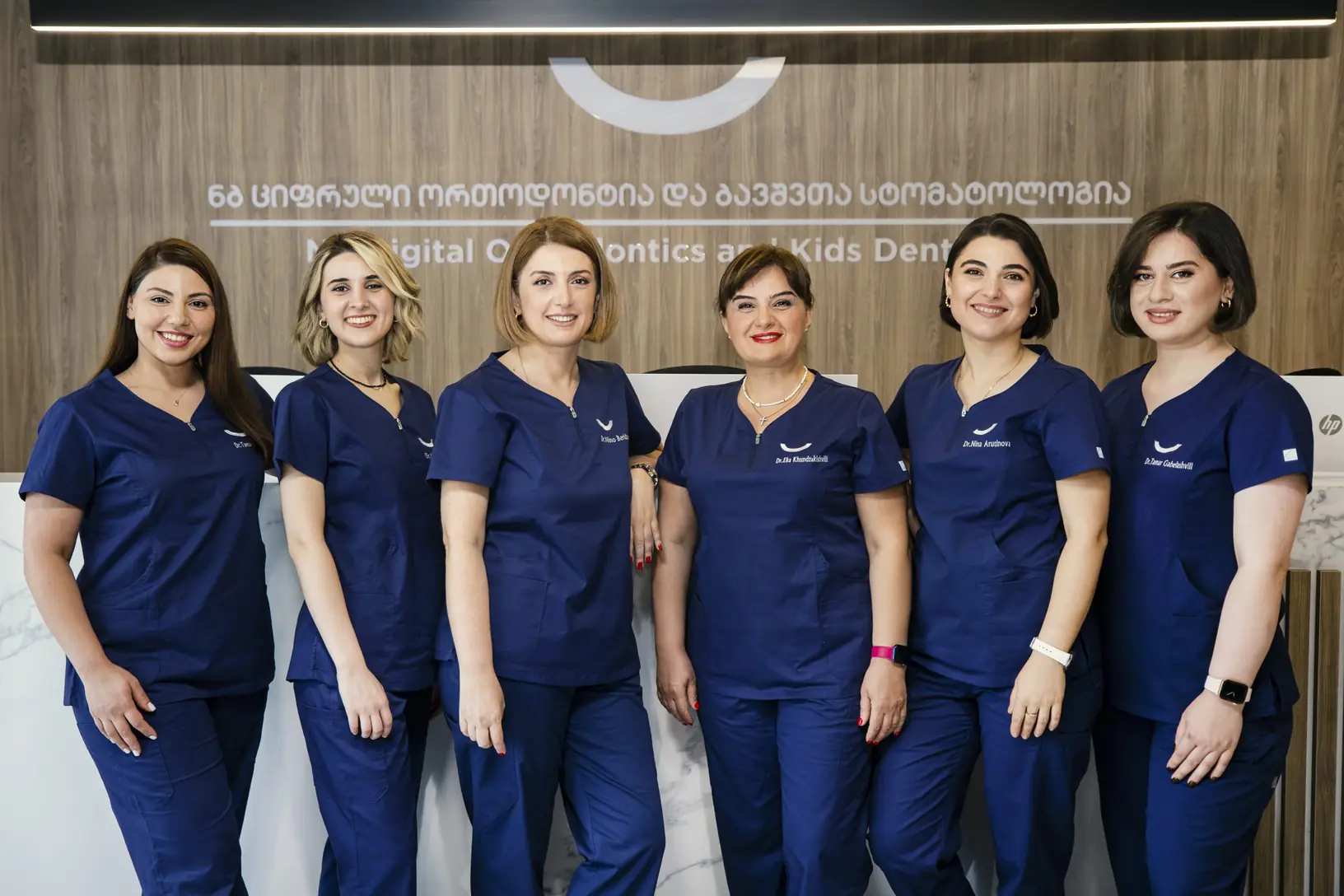
If you are interested in these questions too, in this blog the expert orthodontists of NB Dental – Nino Beridze’s Clinic explain teeth straightening in detail, based on the most common cases.
When is teeth straightening needed?
Teeth straightening is needed when the teeth are crowded or tilted, when there are large gaps between them, or when the upper and lower teeth do not meet properly. Such a disorder may present as a distal, mesial, deep, open or cross bite.
Misaligned teeth and a disturbed bite can:
- Make cleaning the teeth harder. The toothbrush cannot reach every surface equally well, so plaque builds up more easily in the mouth and the risk of caries and gum inflammation increases;
- Make chewing harder and also affect speech negatively;
- Increase the risk of damage to the jaw joint, because the chewing load is distributed unevenly across the teeth.
At what age can teeth be straightened?
Teeth can be straightened both in childhood and in adulthood, because orthodontic treatment has no strict age limit. The pediatric orthodontists of NB Dental – Nino Beridze’s Clinic see patients for a first consultation from the age of 5 or 6. At this stage they observe the development of the jaws and teeth, assess the bite and determine what may become necessary in the future.
It is not too late to straighten teeth in adulthood either. It is true that treatment takes more time because the bone tissue is fully formed, but the desired result can be achieved at 30, 40 and 50 as well.
Which teeth straightening methods exist?
The treatment method is chosen according to the type and complexity of the problem and the age of the patient, and the orthodontist makes this decision based on the diagnostic results. Two main methods are used to straighten teeth: braces and aligners.
How do braces straighten teeth?
A bracket is a small component that is fixed to the tooth and holds an orthodontic archwire. The wire applies light, constant pressure to the teeth, which makes them move slowly. The orthodontist adjusts this system during visits, and the teeth keep moving in the desired direction and gradually straighten.
The working principle of braces is the same, but their types differ by material and by the way the wire is attached. Three types of braces are used at NB Dental – Nino Beridze’s Clinic:
- Metal braces are durable and have been used in orthodontics for many years. The wire is attached to the brackets with small elastics, so-called ligatures. Ligatures come in different colors and are changed at scheduled visits;
- Ceramic braces are close to the natural color of the tooth and are less noticeable than metal braces. This type is often chosen by patients for whom the visual side matters during treatment;
- Self-ligating braces do not need extra elastics, because the wire is held by a mechanism built into the bracket. This type of braces is adjusted at longer intervals.
Teeth straightening with braces is possible for almost every orthodontic problem, including complex cases where other methods are less effective.
How are teeth straightened without braces – with aligners?
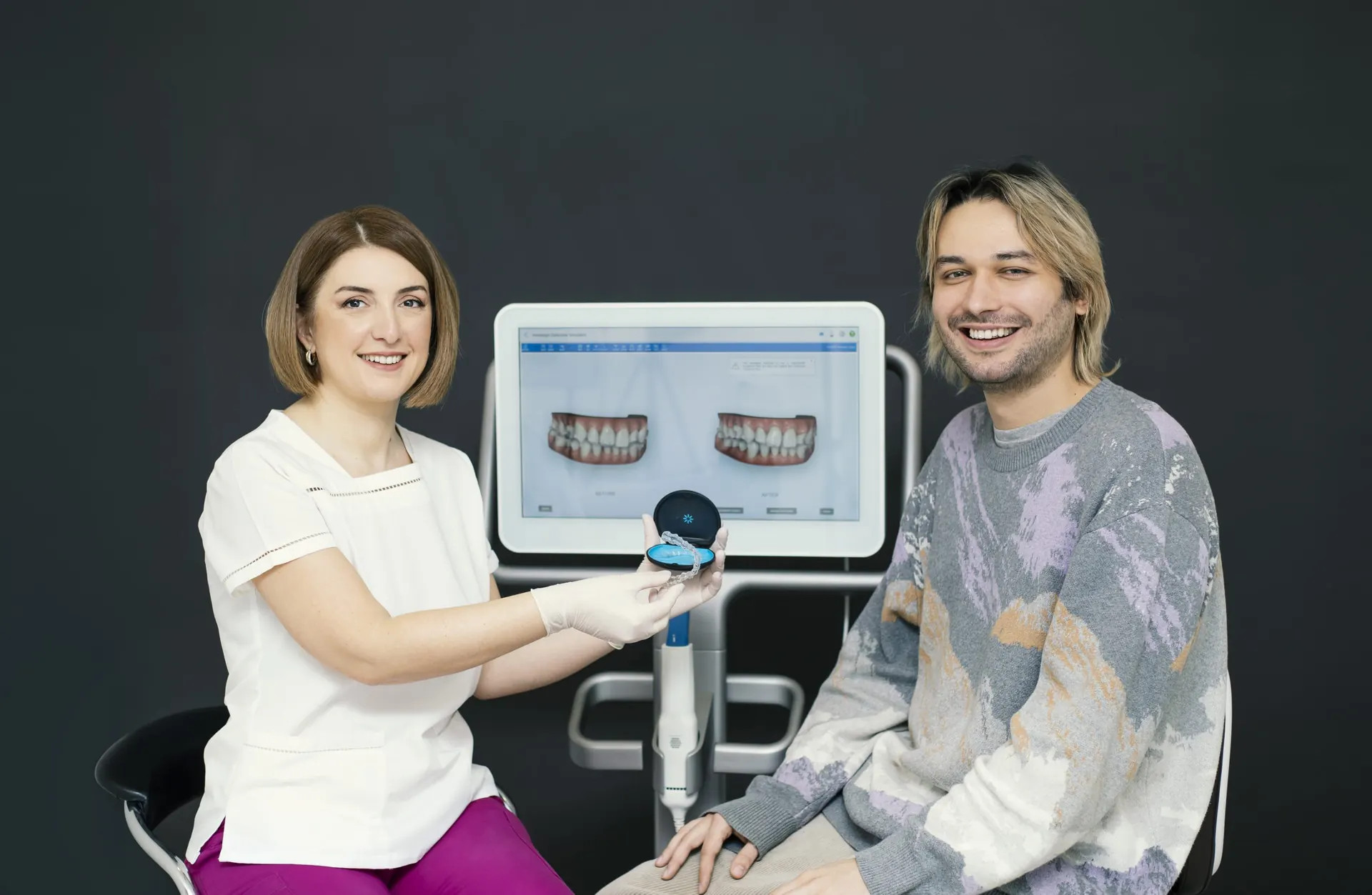
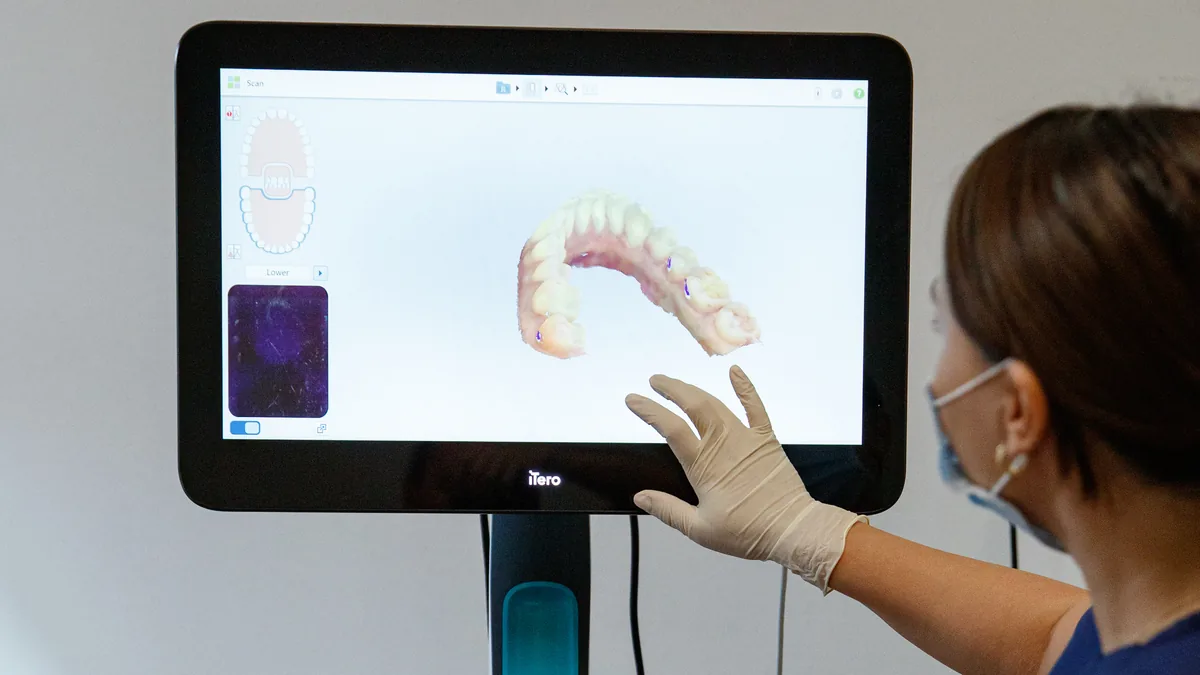
The alternative to braces is aligners, that is, clear, removable orthodontic trays made from a model created by digitally scanning the patient’s teeth.
Teeth straightening with aligners proceeds in stages. During treatment the aligners are replaced in sequence, usually once every one or two weeks. Each of them moves the teeth a small distance, so they gradually take the planned position. For the desired result the patient must wear the tray about 22 hours a day and remove it only for eating and brushing.
Because of the clear material, aligners are less visible, and once removed the teeth are cleaned as usual. Not every type of disorder can be corrected with this method, so in complex cases the orthodontist may still recommend treatment with braces. But it is always worth remembering that both braces and aligners are means of straightening teeth, while the result depends on accurate diagnostics, the method chosen for the specific case and a properly drawn-up treatment plan.
How should you care for your teeth during orthodontic treatment?
The result of orthodontic treatment also depends on daily care, so the team of NB Dental – Nino Beridze’s Clinic advises you to follow these few rules:
- When wearing braces, clean your teeth with interdental brushes. Using an irrigator is also advisable, because the stream of water effectively removes food debris left around the braces;
- Remove the aligner before eating and brush your teeth before putting it back in, so that no food debris gets under the tray;
- Clean the aligner every day with a soft brush and cool water;
- During treatment with braces avoid hard and sticky food, for example nuts, candy, caramel and chewing gum. Hard food can break a bracket, while sticky food can stick to the wire and change its shape;
- Cut fruit and vegetables into small pieces and eat them that way, and avoid biting into them directly;
- If a bracket comes off, the wire loosens or a tray is lost, do not try to fix the problem yourself. Contact your orthodontist and schedule a visit in the coming days. If the problem is resolved in time, the treatment plan will not change, while a delay may slow the process down.
What does teeth straightening at NB Dental include?
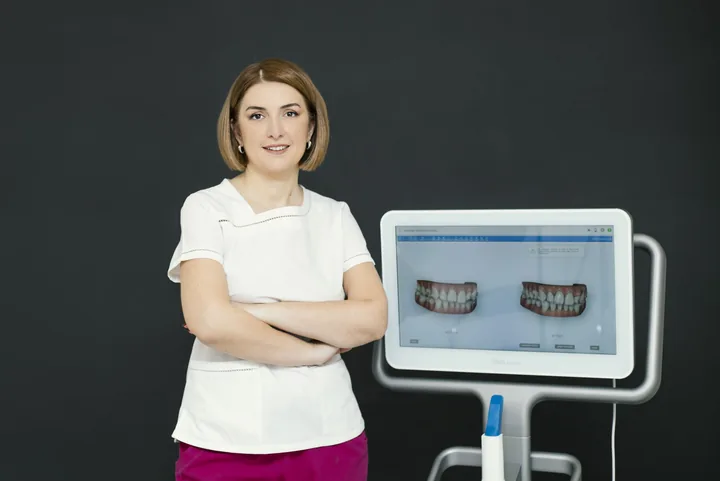
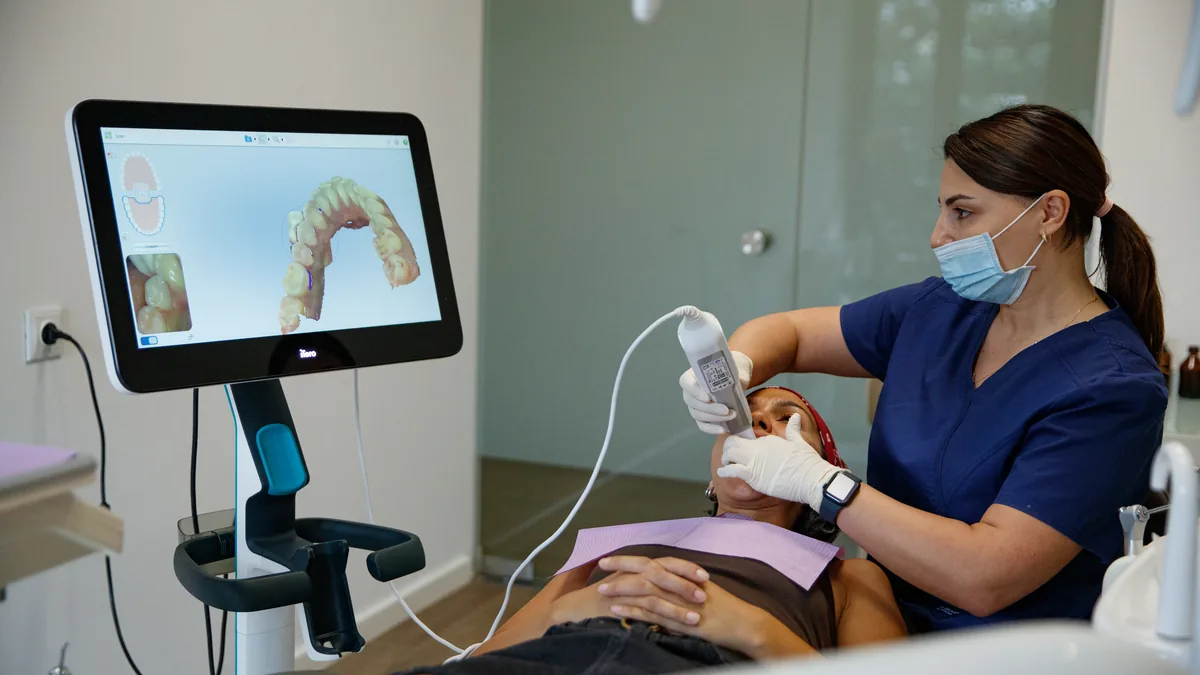
At the first visit the orthodontist assesses the condition of the mouth, the bite, the relationship of the jaws and the proportions of the face, and on this basis determines which examinations are needed. During diagnostics, digital orthodontics technologies are used, including a digital scanner that creates a three-dimensional model of the teeth. At the same time the aesthetic and functional side of the expected result is assessed, so that the smile fits the patient’s individual look harmoniously and the bite is correct too.
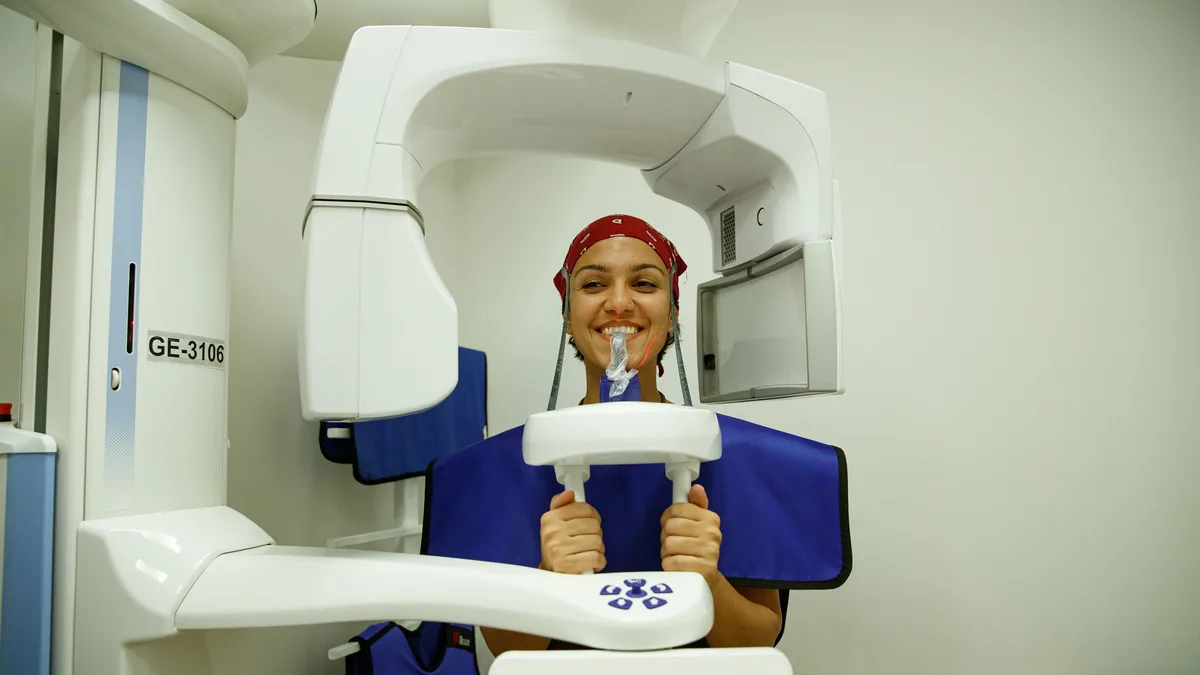
Based on the examination results, the orthodontist draws up a treatment plan and explains to the patient which method will be effective, roughly how long treatment will last and how often visits will be needed. If the case requires the involvement of a therapist, periodontist, surgeon, prosthodontist or another specialist, all of them work in a coordinated way under a single plan.
After treatment is completed, the orthodontist prescribes a retainer to keep the achieved result stable. A retainer can be fixed or removable. A fixed retainer is attached to the inner side of the teeth, while a removable one is a tray that is mostly worn at night.
If the position of your teeth or your bite bothers you, do not postpone a visit to the orthodontist. Schedule a visit to NB Dental – Nino Beridze’s Clinic, where expert orthodontists will take care of your harmonious smile.
Frequently asked questions
How much does teeth straightening cost?
There is no universal price for teeth straightening, because the cost depends on the treatment plan and the complexity of the case. The orthodontist will tell you the exact amount after the consultation and diagnostics. At the clinic you can pay in stages or use installment plans from partner banks.
Is tooth extraction necessary during orthodontic treatment?
Not always. Extraction is considered when there is not enough space to move the teeth.
How long does teeth straightening take?
Active treatment usually lasts from one to three years. The duration depends on the complexity of the disorder, the chosen method and the age of the patient.
Is wearing braces or aligners painful?
After braces are adjusted or in the first days of using a new aligner, a feeling of pressure on the teeth may appear, but it usually disappears within a few days.
Why do patients choose NB Dental?
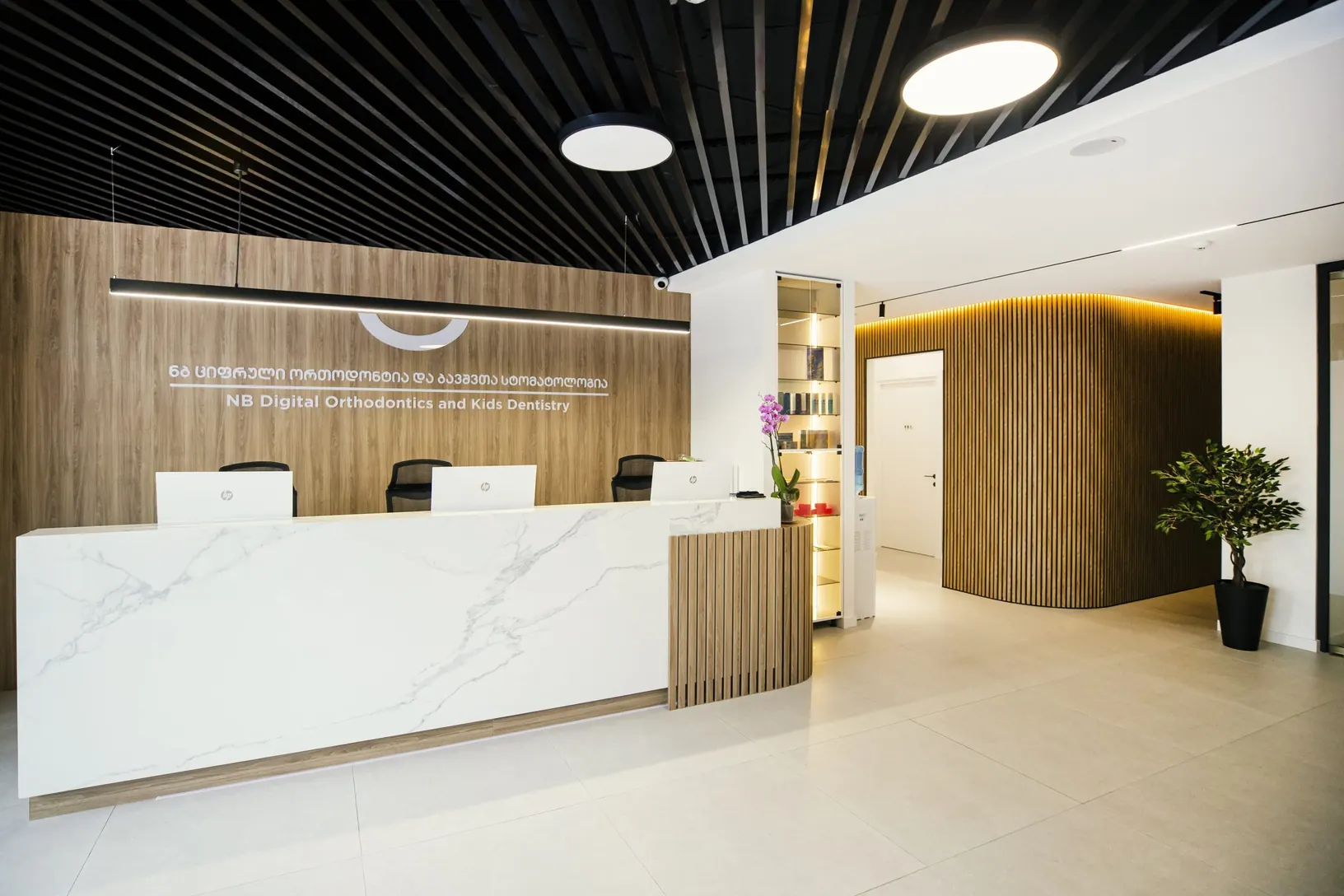
NB Dental – Nino Beridze’s Clinic has been operating since 2010, and orthodontics is one of the clinic’s main areas of expertise. Orthodontic treatment at the clinic is planned with digital technologies, and every necessary procedure is performed in one place. A team of experienced orthodontists manages both standard and complex cases and, when needed, cooperates with specialists of other profiles. The orthodontists discuss every stage of treatment with the patient in advance and answer any question in detail.
How do I book a consultation?
To schedule a consultation, call us at (032 2) 32 22 27 or email us at info@nbdental.ge. The clinic is located in Saburtalo, at 1a Davit Tavkhelidze Street, and is open Monday through Saturday from 09:30 to 20:00.