Wisdom tooth removal is only needed when there is a specific medical reason for it. For example, extraction may become necessary if the gum around the tooth is inflamed or if the tooth presses on the neighbouring tooth and damages it. If it has erupted properly, is healthy and does not make daily hygiene difficult, the dentists of “NB Dental - Nino Beridze Clinic” do not recommend removing it.
What Does a Wisdom Tooth Do and Why Is It Not Redundant?
People often think that a wisdom tooth is useless and brings nothing but trouble. In reality, a healthy, properly erupted wisdom tooth takes part in grinding food while chewing and shares the load with the other chewing teeth. This natural load also strengthens the jawbone and helps it keep its density.
In addition, a healthy wisdom tooth may later serve as a reliable support for a prosthesis if a neighbouring tooth has to be removed because of caries or trauma. For this reason dentists always try to preserve a healthy tooth and plan its removal only when there is a specific medical necessity.
When Is Wisdom Tooth Removal Necessary?
Problems mostly appear when there is not enough space for the tooth to erupt. In that case it emerges from the gum only partially, and food debris and bacteria collect in the so-called pocket formed between the tooth and the gum. As a result the gum swells and inflammation begins. This condition is called pericoronitis. It is characterised by acute pain, swelling and sometimes difficulty opening the mouth. If the inflammation keeps coming back, the best way to solve the problem for good is to remove the wisdom tooth.
Because of its position, a wisdom tooth is hard to clean well with a toothbrush, so caries can develop on it quickly. In such cases a tooth filling is possible if the tooth stands straight and the damaged area is easy for the dentist to reach. However, when a filling cannot be placed properly, extraction is needed.
Removal is also necessary when a wisdom tooth that has erupted in the wrong direction presses on the neighbouring tooth. Constant pressure can damage the root or crown of the adjacent molar. In even more complex cases a cyst develops around an unerupted tooth trapped in the jawbone, which damages the bone tissue over time.
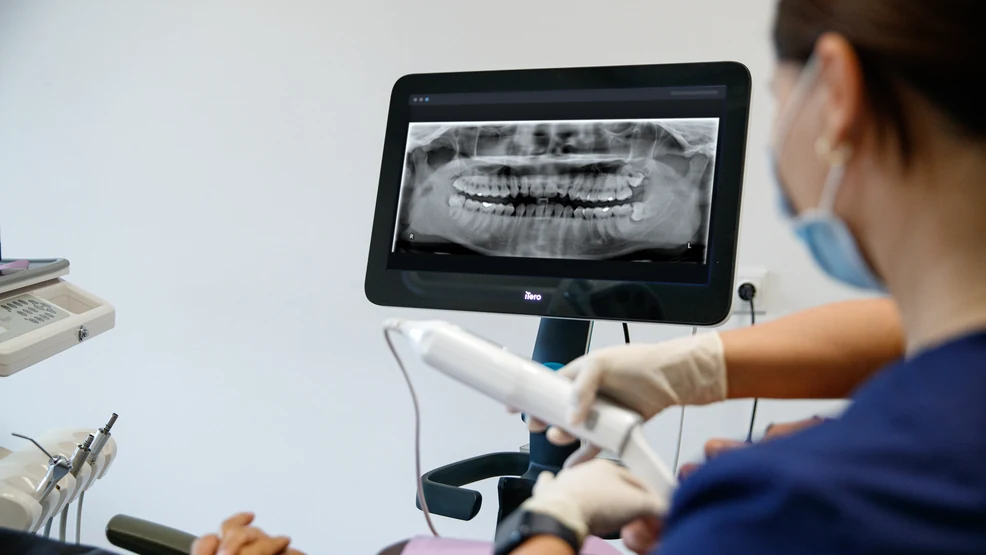
Such processes often run without any pain at all and can only be detected on an X-ray. That is why a planned preventive check-up helps you keep the condition of your wisdom teeth under constant control. And if removal does become necessary, the procedure is performed under local anaesthesia, while intravenous sedation is also used in more complex cases.
Orthodontic Treatment and Wisdom Teeth: Why You Should Not Remove Them in Advance
Some patients who want braces or wish to be treated with aligners believe that their wisdom teeth must be removed first. In the practice of “NB Dental - Nino Beridze Clinic” there are frequent cases when a patient has this procedure done before the first consultation with an orthodontist, and treatment planning then shows that it was not needed.
Before treatment begins, the orthodontist evaluates a panoramic X-ray: measures the space available in the jaw, looks at the position of the wisdom teeth and examines whether their location will interfere with straightening the dental arch. If there is enough space, the doctor simply monitors them during treatment. The question of removal may arise if, because of the position of a wisdom tooth, there is not enough space to move the back teeth.
Removing a wisdom tooth before consulting an orthodontist can in fact complicate treatment. The point is that the orthodontist sometimes considers the wisdom tooth as an anchor or plans to use it at a later stage of treatment. Therefore, if you want teeth straightening, be sure to decide the fate of your wisdom teeth together with your treating doctor. This way you will avoid unforeseen difficulties and keep a healthy tooth as well.
Frequently Asked Questions
Is wisdom tooth removal painful?
The procedure is performed under local anaesthesia, so you should not feel pain during the process itself. A slight unpleasant sensation after the anaesthetic wears off is completely natural and, as a rule, gradually subsides within a few days.
If a complex intervention is planned or you have a strong fear of the procedure, the surgeon and the anaesthesiologist will assess in advance how appropriate intravenous anaesthesia is for you.
How can wisdom tooth pain be eased before visiting the doctor?
To reduce the discomfort temporarily, you can apply a cold compress to the cheek and rinse your mouth with warm salt water. If necessary, an over-the-counter painkiller may also be taken at the dose stated in the leaflet. Keep in mind that these methods only relieve the symptoms and cannot eliminate the cause of the pain, so a visit to the dentist is needed.
Can a wisdom tooth be filled instead of removed?
Yes, if the tooth stands straight and the problem surface can be reached with instruments, we treat it in the usual way. However, the decision depends on the depth of the caries and the condition of the roots, which the dentist determines after examining the mouth and the X-ray.
How much does wisdom tooth removal cost?
The price of wisdom tooth removal depends on the complexity of the procedure. The doctor will tell you the exact amount after examining your mouth and evaluating the X-ray.
How do I book a consultation?
To plan a visit, call us at (0322) 32 22 27 or write to us at info@nbdental.ge. The clinic is located in Saburtalo, at 1a Davit Tavkhelidze Street, and is open Monday to Saturday inclusive, from 09:30 in the morning to 20:00 in the evening.